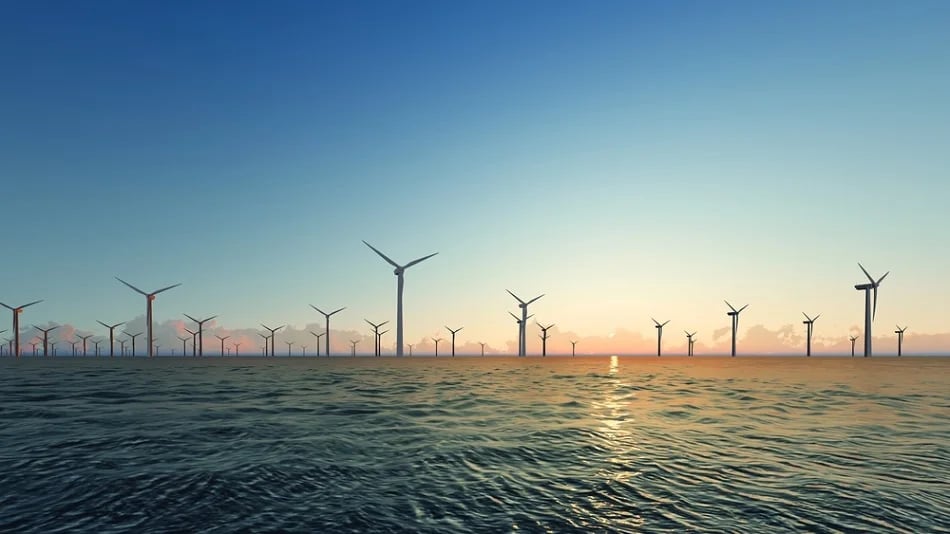
Drone Technology in
Offshore Wind Farms
Managing complexity through innovation - an investigation into drone-based inspection systems for the Hornsea Wind Farm project.
1. Introduction
Modern infrastructure projects are increasingly being characterized through high levels of complexity, driven by dynamic operating environments, uncertainty, and technological advancements. Offshore wind farms, such as the Hornsea Wind Farm, are an example of this through its harsh environmental conditions, vast scale, and interconnected systems. Lafhaj et al (2024)
The portfolio assesses how drone technology can be integrated to manage complexity throughout the Hornsea Wind Farm project, especially with the idea on enhancing operational efficiency, refining decision making and minimizing risk.
2. Technology Overview - Drone Based Inspection Systems
2. Technology Overview – Drone Based Inspection Systems
Introduction to Drone Technology:
Drone based Inspection Systems are high technological tools used for remote, asset inspection, data collection, and monitoring. Over the last decade the utilization of drones has become further integrated into environments and industries such as infrastructure and energy, which is creating more safer and efficient operations in complex environments. In offshore windfarms projects such as Hornsea drones provide function through data acquisition platforms, providing the capture of high-resolution data that helps real time analysis and decision making. Safie et al (2021)
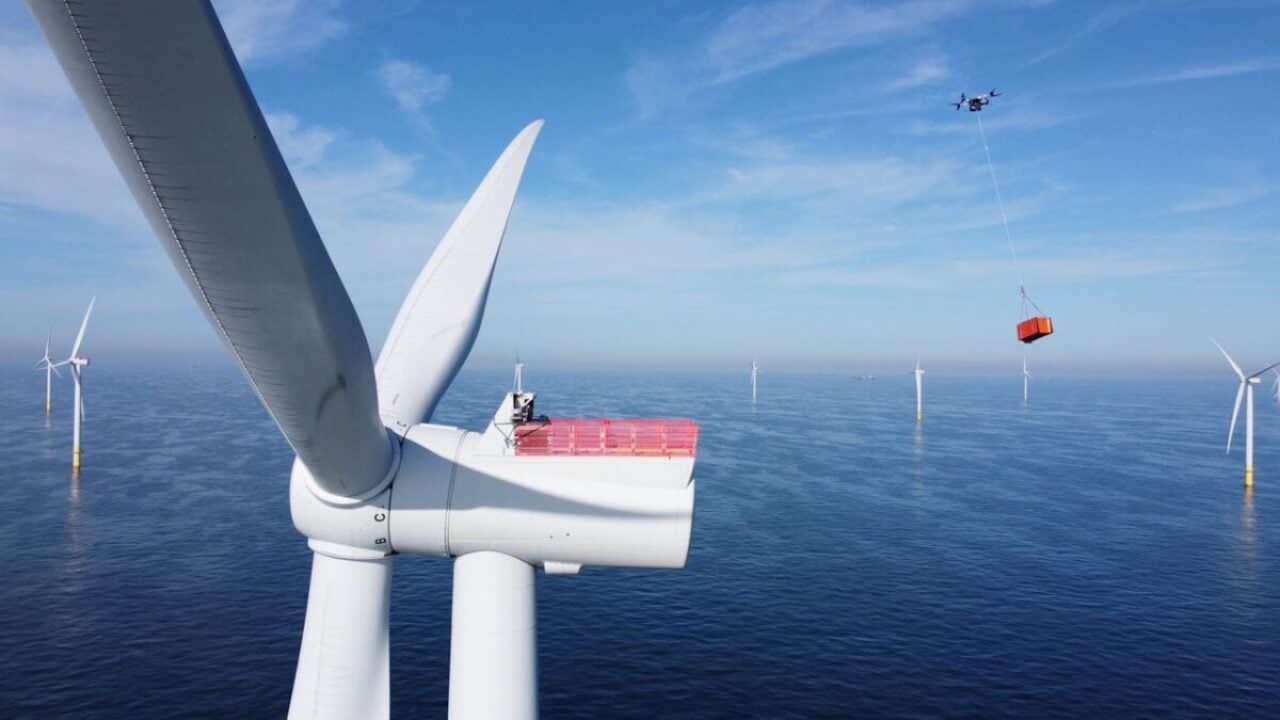
High-Resolution Imaging
Capture detailed visual data for crack detection and structural analysis
Thermal Imaging
Detect performance issues and thermal anomalies in turbine systems
LiDAR Scanning
Precise 3D mapping and measurement of infrastructure components
Real-Time Data
Transmission and capture of real-time data for immediate analysis
AI Integration
Connection with analytic tools and cloud platforms for automation
Remote Operations
Eliminating the need for human exposure to hazardous conditions
3. Project Overview - Hornsea Wind Farm
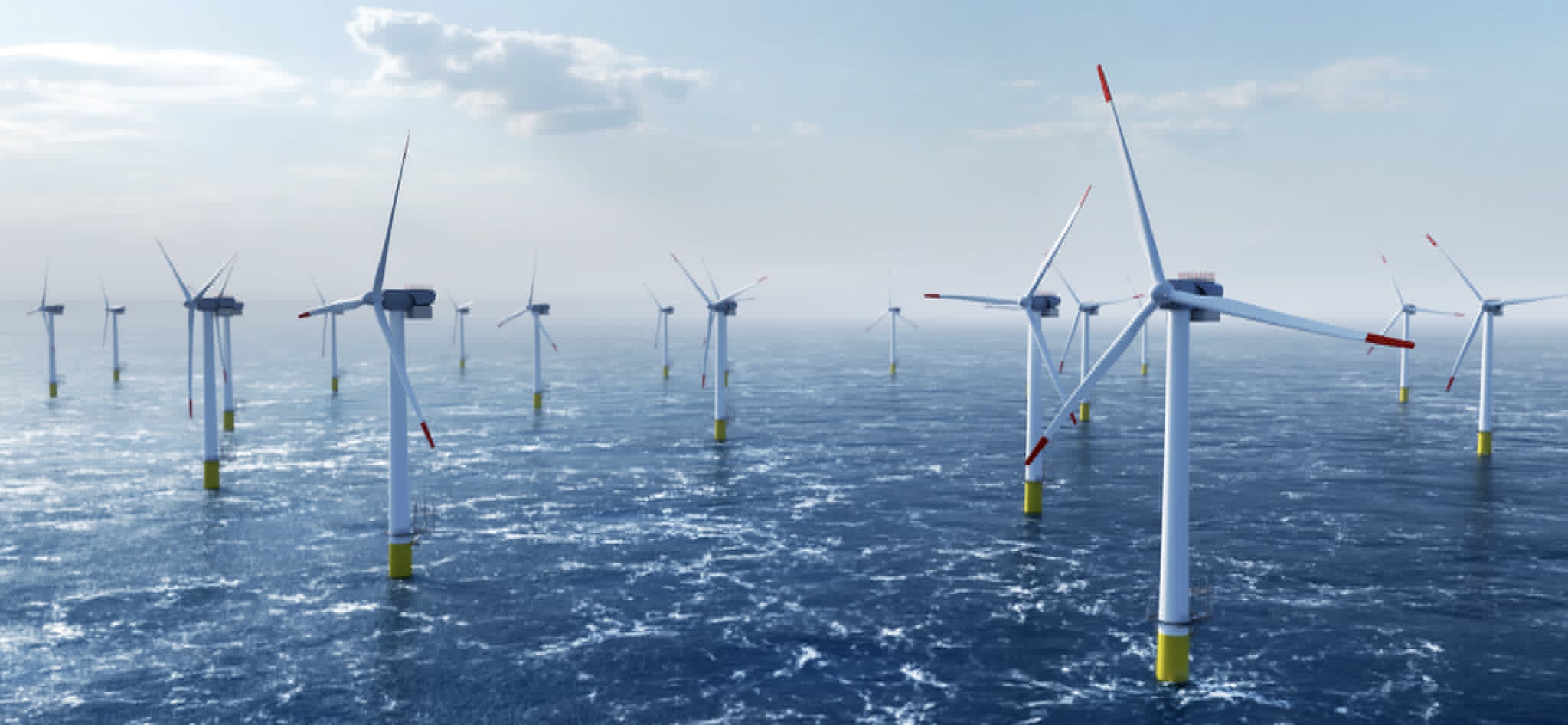
The Hornsea Wind Farm is positioned off the coast of the United Kingdom and is one of the largest wind energy projects in the world. The project comprises of hundreds of wind turbines across a large marine area, which generates renewable energy at a vast scale and contributes towards the projects strategic goal of national sustainability targets. Orsted (2026)
The location and scale of the project introduce many operational challenges. The offshore industry typically has accessibility issues, and the distributed nature of the turbine infrastructure demands collaborative management across multiple interconnected systems. Furthermore, this project possesses an enormous range of stakeholders, including contractors, energy providers, government bodies, and authorities.
Location
UK Coast
Stakeholders
Multi-sector
Scale
Hundreds of Turbines
Goal
Sustainability
4. Complexity Diagnosis - Hornsea Wind Farm
5. Understanding Project Complexity
Diamond Model Analysis (Shenhar & Dvir, 2007)
Novelty – High
The Hornsea Windfarm represents a high level of novelty as it possesses a significant advancement in renewable energy infrastructure. The scale and capability of offshore windfarms are continuing to evolve, pushing further past existing industry benchmark standards.
- The continuous evolution of requirements and performance expectations.
- Uncertainty that comes with the integration of national emergency systems
- Minimal historic precedent at this scale which increases uncertainty and ambiguity.
Effect: Project goals, design requirements and long-term performance outcomes become uncertain through high novelty.
Technology – High Tech
The project is heavily replied to integrated and advanced technologies, including:
- Control and monitoring systems
- Grid integration and subsea cabling
- Offshore wind turbine systems
Effect: These technologies are well established, however, they're highly complex when designed and constructed in offshore environments.
Complexity – Array (Systems of Systems)
Complexity classification of the Hornsea Windfarm fall's into as an "Array" project, which is described as many interconnected systems operating together.
- Many turbines across a large offshore area
- Electrical, Mechanical and digital systems integration
- Transmission, generation and monitoring systems interdependence
Effect:
- Interdependencies cause high structural complexity
- Stakeholders and multiple systems create coordination challenges
- Significant system wide effects can result from even small failures
Pace – Fast / Time Critical
The project functions under large pressure driven through:
- Sustainability targets and energy demands
- Regulatory deadlines and government policies
- Early energy generation created through commercial pressures
Effect:
- Planning and execution flexibility reduced
- Compressed timelines cause increased risk of errors
- Increased pressure on the decision-making process
5. Complexity Using Drone Technology
Environmental Complexity – Remote Access and Safety
Issue:
The offshore wind farm operates in harsh unpredictable environments, including limited accessibility, swells and very high winds. Typical of these windfarms would usually require boats, cranes and technicians working at heights which further creates safety risks.
Answer:
- Eliminate the need for human risk to hazardous conditions
- Enhancing the ability to operate in hard-to-reach areas
- Inspections of turbines and infrastructure can be completed remotely
Impact:
- Large reduction in safety risk
- Increase in reliability and frequency of inspections
- Enhanced accessibility to offshore assets
Structural Complexity – Remote Access and Safety
Issue:
The Hornsea Windfarm is an immense distribution of interconnected wind turbines, creating inspection and coordination across the whole project challenging.
Answer:
- Quick inspection times across the system of turbines
- Enhancing the ability of mapping infrastructure and high-resolution imaging
- Monitoring many areas more efficiently
Impact:
- Increased effectiveness of system wide indicators and performance
- Increased efficiency in identifying systems failures and faults across interconnected systems
- Maintenance planning and coordination improvements
Technical Complexity – Advanced Data Collection
Issue:
This project requires accurate and detailed data collection for performance optimization and maintenance, therefore relying heavily on complex technologies. Typical methods used during inspection and maintenance aren't effective as early-stage failures and defects.
Answer:
- Analysis of digital system integration
- Performance issues, corrosion and crack detection
- Utilization of high-resolution cameras, LiDAR and thermal imaging
Impact:
- The identification of technical problems increased due to enhanced accuracy
- Increased turbine performance reliability
- System failures reduced because of more effective early detection
Uncertainty and Ambiguity – Real Time Decision Making
Issue:
System performance variability limited real time visibility and evolving conditions create high levels of uncertainty.
Answer:
- Transmission and capture of real time data
- Connection with analytic tools and cloud platforms
- Asset condition monitoring
Impact:
- Increased effectiveness of data availability reducing uncertainty
- Increase in efficiency during the decision-making process
- More effective project adaptability throughout the dynamic environment
Pace – Efficiently and Speed
Issue:
To meet energy production performance the project operates under time sensitive conditions, requiring efficient maintenance and decreased downtime.
Answer:
- Quick inspection deployment
- Manual access equipment or shutdowns need reduced
- Increase in reporting and data collection efficiency
Impact:
- Down time of turbines minimized
- Operation effectiveness and efficiency enhanced
- More effective ability to meet project guidelines
Schopherer et al (2025)
Challenges of Implementing Drone Technology
However, whilst drone-based inspection processes offer large improvements in managing complexities across the projects, the drone implementation in the Hornsea Wind Farm project comes with challenges. Identifying challenges is critical in exposing practical constraints of industry technologies and adds support of the need for adaptive project management strategies.
Environmental Limitations
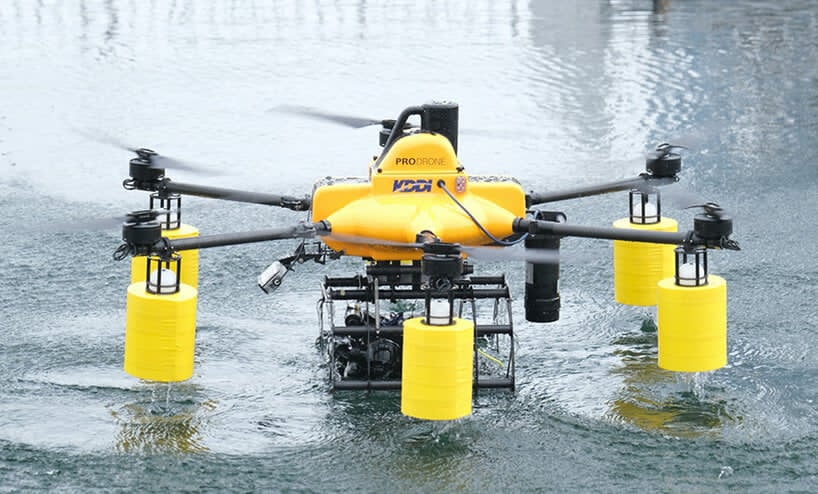
Challenge: These environments in which offshore windfarms are implemented are extreme environments, with rain, sea spray, changing weather conditions and strong winds.
- Reduced flight stability resulting from high winds
- Damaged equipment through rain and moisture
- Minimal visibility affects data accuracy
Impact:
- Inspection schedule delays
- Data collection reliability reduced
- Enhanced operational uncertainty
Battery Life and Operational Range
Challenge: Large scale offshore environments like Hornsea, drones are constrained by limited battery capacity and flight duration.
- Inspection coverage restricted due to large scale
- Logistical difficulties increase due to long distances between turbines
- Additional planning needed for frequent battery changes
Impact:
- Large scale inspections see a reduction in efficiency
- Demand for many deployments to cover the full site
- Increased operational complexity
Data Management and Processing Complexity
Challenge: Utilizing drones for inspections create vast volumes of including images, high resolutions data, video and sensor outputs.
Impact:
- Significant requirements for data storage and processing
- Time constraints for processing and analysis of data
- Without the proper systems in place the risk of information overload is high
Regulatory and Compliance Constraints
Challenge: In offshore and industrial environments drone operations are subject to tight aviation and safety regulation.
- Altitude and flight zone restrictions
- Operators require licensing
- Privacy and safety standards compliance needed
Impact:
- Limits of drone usage in certain times and locations
- Operational and administration burden increased
- Approval processes can cause potential delays
Skill and Training Requirements
Challenge: Skilled operators and technical expertise are required for effective use of drone technology in this project.
- Certified operators and trained pilots are required
- Data analysts needed to interpret data and results
- Complexities with integration with existing project teams
Impact:
- Staffing and training costs increase
- Insufficient expertise created a risk of errors
- Specialized personnel dependance
SDU (2018)
Strategies
Adaptive and Flexible Project Management
Strategy:
Flexibility in excavation and planning need to be adopted through adaptive management.
- Adjustment of weather inspections from weather conditions
- Drone development using contingency
- Establish iterative monitoring processes
Reasoning:
Rigid planning is ineffective when dealing with complex projects which are dynamic and unpredictable. Responding to changing environmental and operational conditions require adaptive approaches from project teams.
Result:
- Environmental uncertainty reduces disruptions
- Enhanced responsiveness in complex project fields
Integration with Data Analytic and Cloud Systems
Strategy:
Integrate drone technology with data analytics platforms, AI and cloud computing to manage immense volumes of data effectively.
- Defection and image processing automation
- Real time access and data storage centralization
- Utilizing predictive analysis for maintenance planning
Reasoning:
Where data is analyzed and used to support decision making, drones can be used to support decision making.
Result:
- Decreased data processing delays
- Enhanced decision-making speed and accuracy
- Information complexity management increases
Regulatory Compliance and Risk Management Planning
Strategy:
Integrate structured processes to manage operational risk and regulatory requirements.
- Aviation and safety regulation comply with drone operations
- Employ risk assessments before deployment
- Identify clear operational guidelines and procedures
Reasoning:
Robust risk management principles ensure that potential risks are established and addressed promptly rather than reactively.
Result:
- Compliance issue delays are reduced
- Enhanced operational reliability
- Improved alignment with safety standards
Investment in Skills and Training
Strategy:
Create internal abilities by training members in data analytics and drone operations.
- Drone operator certifications
- Interpreting drone data through upskilling project teams
- Technical and project teams achieving cross functional collaboration
Reasoning:
Team effectiveness and staff capability are crucial in managing complex projects. Skilled people support effective use of technology.
Result:
- Improved reliability of drone operations
- External specialists dependency decreased
- Inreased integration within project teams
Operational Planning and Resource Optimization
Strategy:
Enhanced efficiency through improving the way in which drones are utilized across the project.
- Maximizing coverage within battery limits through planned inspection routes
- Utilizing multiple drones for large scale projects
- Minimizing downtime through scheduled operations
Reasoning:
Time sensitive projects need effective and efficient utilization of resources to meet deadlines and maintain performance of the implemented systems.
Result:
- Enhanced operational efficiency
- Range and battery limitation impact minimized
- Increased alignment with project timelines
Kandrot and Holloway (2020)
Impact & Evaluation
The use of drone technology in the Hornsea Wind Farm project shows a clear advancement in how complexity is identified and managed from different angles. Looking from an efficiency perspective, drones provide reduced downtime and costs associated with the traditional inspections through enhancing quick developments and decreasing the need for specialized equipment for accessibility. Overall, whilst challenges are known, the use of drone technology provides significant value towards increasing operation efficiency and effectiveness of offshore project environments.
References
- (No date a) Applications of drone technology for sustainable ... Available at: https://coast.interreg-npa.eu/subsites/coast/DT2.1.1_Applications_of_drone_technology_for_sustainable_development_of_the_coastal_zone.pdf (Accessed: 02 May 2026).
- (No date b) University of Southern Denmark drones for offshore and Maritime Missions. Available at: https://findresearcher.sdu.dk/ws/portalfiles/portal/153908406/Drones_for_offshore_and_maritime_missions_SDU_Spring_2018_1_.pdf (Accessed: 02 May 2026).
- (No date c) Rmit.instructure.com. Available at: https://rmit.instructure.com/courses/160616/modules It's(Accessed: 20 April 2026).
- (No date d) Hornsea 3 Offshore Wind Farm | ørsted. Available at: https://hornseaproject3.co.uk/ (Accessed: 02 May 2026).
- Lafhaj, Z. et al. (2024) 'Complexity in Construction Projects: A Literature Review', Buildings, 14(3), p. 680. doi:10.3390/buildings14030680.
- Schopferer, S. et al. (2025) 'Offshore Wind Farm Delivery with autonomous drones: A holistic view of system architecture and onboard capabilities', Drones, 9(4), p. 295. doi:10.3390/drones9040295.
- Shenhar, A.J. and Dvir, D. (2007) 'Project Management Research—the challenge and opportunity', Project Management Journal, 38(2), pp. 93–99. doi:10.1177/875697280703800210.